
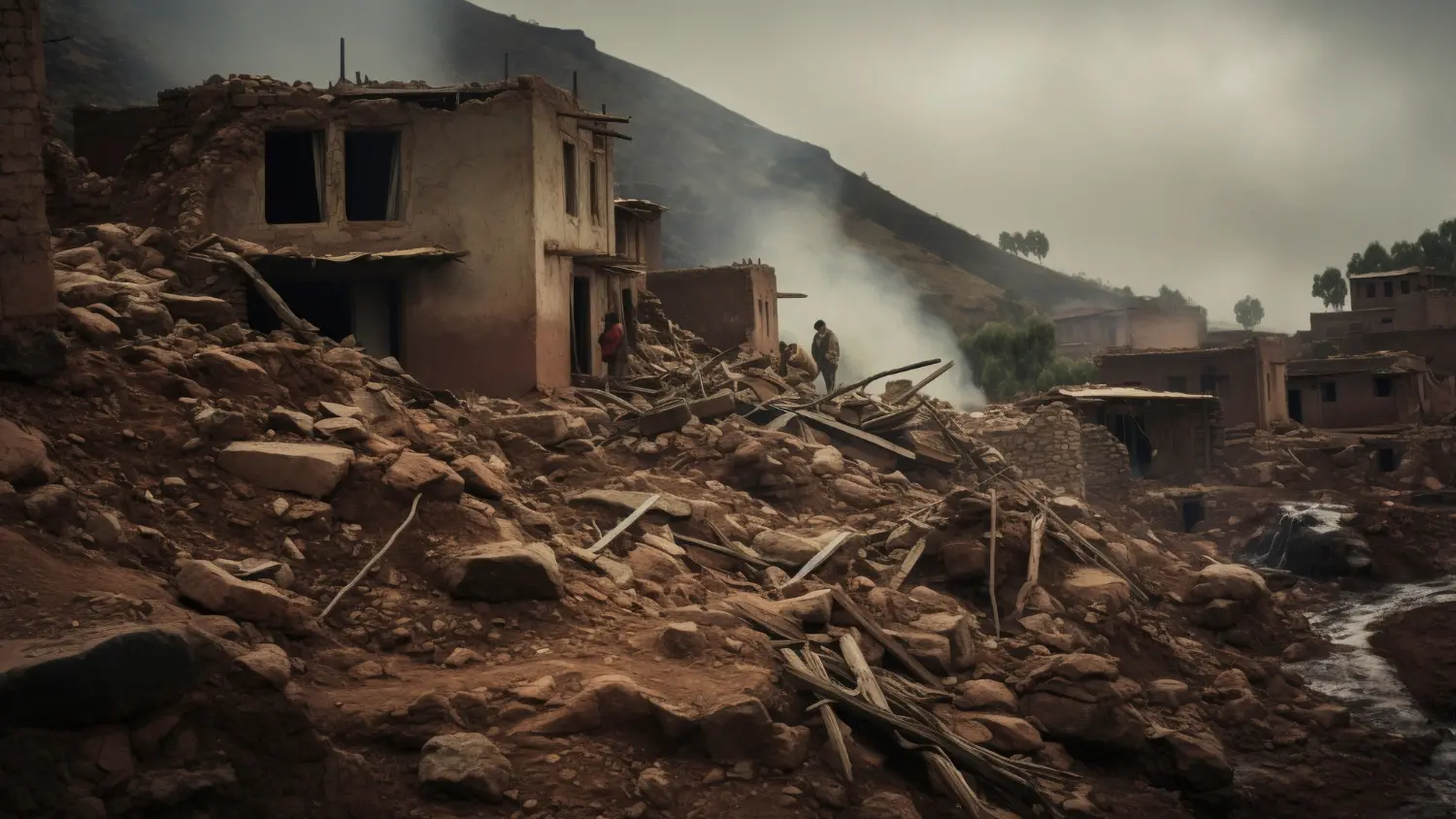

The world is no stranger to natural disasters, and their increasing frequency serves as a sobering reminder of the pain and devastation they bring. Yet, amidst these trials, we find solace in Jesus’ words in Matthew 24:7, where He forewarns of famines and earthquakes in various places. While it’s natural to feel fear and uncertainty in the face of such events, Jesus urges us not to despair but to remain vigilant and prepared for His second coming.
There are numerous historical accounts of earthquakes and natural disasters that have had significant impacts on societies throughout history. Here are just a few examples:
- Pompeii and Herculaneum (79 AD): Perhaps one of the most famous natural disasters in history, the eruption of Mount Vesuvius buried the Roman cities of Pompeii and Herculaneum under volcanic ash and pumice, preserving them in remarkable detail for centuries.
- Lisbon Earthquake (1755): A massive earthquake, estimated to have a magnitude of 8.5-9.0, struck Lisbon, Portugal, on All Saints’ Day, causing widespread devastation and loss of life. The earthquake was followed by a tsunami and fires that further ravaged the city.
- Yellowstone Eruption (ca. 640,000 years ago): The eruption of the Yellowstone supervolcano in what is now the United States is one of the largest volcanic events in Earth’s history. The eruption created the Yellowstone Caldera, a vast crater that is still active today.
- Great Kanto Earthquake (1923): This earthquake, with an estimated magnitude of 7.9, struck the Kanto region of Japan, including the Tokyo-Yokohama metropolitan area. The quake, along with ensuing fires and tsunamis, resulted in the deaths of over 100,000 people and widespread destruction.
- Indian Ocean Tsunami (2004): Triggered by a massive undersea earthquake off the coast of Sumatra, Indonesia, the Indian Ocean tsunami was one of the deadliest natural disasters in recorded history. It resulted in the deaths of over 230,000 people in 14 countries and caused widespread destruction along the coastlines of affected nations.
- Hurricane Katrina (2005): One of the costliest and most destructive hurricanes in U.S. history, Hurricane Katrina struck the Gulf Coast, particularly affecting the city of New Orleans. The storm surge breached levees, causing catastrophic flooding and resulting in the displacement of hundreds of thousands of people and extensive damage to infrastructure.
These historical accounts serve as reminders of the immense power and impact of natural disasters on human societies, highlighting the importance of disaster preparedness, resilience, and global cooperation in mitigating their effects.
In this discourse, my intention is not to dwell on the heartbreak caused by natural disasters, as their effects are all too familiar. Instead, I seek to offer encouragement and hope in the midst of adversity. Famines, a recurring theme throughout history, prompt us to recall the response of the early disciples as recounted in Acts 11:27-30. Inspired by prophecy, they generously provided aid to those affected, exemplifying compassion and solidarity in times of crisis.
Epidemics and plagues, devastating in their scope, have also left their mark on humanity, with the recent global pandemic serving as a poignant reminder of our vulnerability. Meanwhile, earthquakes and hurricanes continue to wreak havoc, leaving behind destruction and loss. While these events may seem apocalyptic in nature, Jesus reminds us in Matthew 24:8 that they are merely the beginning of sorrows, signaling the urgency of His imminent return.
Yet, amidst the turmoil, we find hope in Christ’s promise of salvation and His ultimate triumph over death and calamity. Our waiting, though marked by tension and despair, is infused with the assurance of Christ’s intervention. We are called to await His return with steadfast hope, knowing that He will set all things right in the end.
Moreover, we are tasked with attending to the needs of those affected by disasters, embodying the love and compassion of Christ. Imagine waking up to the deafening roar of a powerful earthquake, as the ground beneath your feet convulses and buildings crumble around you. Screams pierce the air as people frantically try to flee, but the chaos and confusion are overwhelming. In the aftermath, you emerge to find a landscape transformed by destruction: streets littered with debris, once-sturdy structures reduced to rubble, and the unmistakable scent of dust and despair hanging heavy in the air.
Amidst the wreckage, you see the faces of your neighbors and loved ones, their expressions etched with shock, grief, and disbelief. Families huddle together, their homes destroyed and their belongings scattered, while emergency responders race against time to search for survivors buried beneath the debris.
The toll of the disaster becomes painfully clear as you witness the human suffering unfold before your eyes. Wounded survivors cry out for medical attention, their injuries a painful reminder of the violence of the disaster. Others mourn the loss of loved ones, their grief raw and unyielding in the face of such an overwhelming tragedy.
As night falls, a sense of darkness and uncertainty descends upon the devastated landscape. Without electricity or running water, basic necessities become scarce, and the struggle for survival intensifies. Yet amidst the despair, you also see glimmers of hope: neighbors coming together to offer support and assistance, strangers lending a helping hand to those in need, and acts of kindness and compassion that defy the devastation surrounding them.
In the days and weeks that follow, the road to recovery is long and arduous. Communities rally together to rebuild what was lost, drawing strength from their shared resilience and determination. But the scars left by the disaster run deep, serving as a sobering reminder of the fragility of life and the need for compassion, solidarity, and support in times of crisis.
This vivid depiction of the devastation and suffering caused by disasters serves as a poignant reminder of the urgent need for empathy, action, and solidarity in response to the challenges faced by disaster-affected communities.
Let our hearts be moved with empathy for a hurting world, as we extend a helping hand to those in need. For in serving others, we emulate the love of Christ and pave the way for His kingdom to come.
As we unite in Christ’s love and anticipate His return, let us hold fast to the hope, faith, and love that bind us together. May we find courage in God’s promises as we navigate through these uncertain times, trusting in His providence and ultimate victory.
In conclusion, let us echo the chorus of hope and faith, proclaiming, “Hallelujah! Christ is King!” For in Him, we find our refuge and our strength, now and forevermore.


